



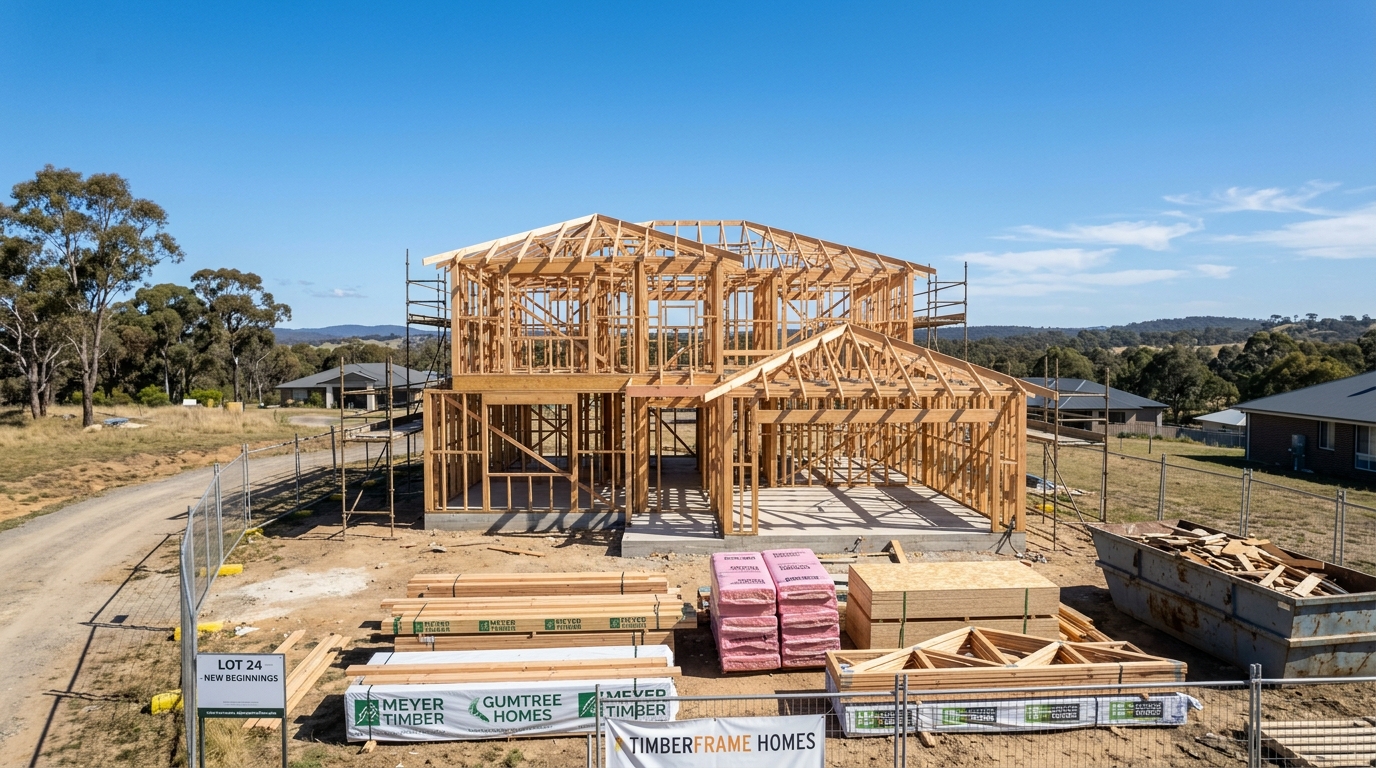
If you’re building a home from scratch or taking on major structural renovations, a standard mortgage won’t quite do the job. So what are construction loans? They’re home loans built specifically for construction, and the big difference is how the money reaches you. Instead of one lump sum, the lender releases the funds in stages as your build progresses.
That staged approach is the whole point, and it shapes how you apply, how you’re charged interest, and how the loan behaves from slab to finished home. Here’s what you need to know before you start building.
Contents
What Are Construction Loans, Exactly?
A construction loan is a home or investment loan designed for building a new property or completing structural renovations. You’d use one to build on vacant land, buy off the plan, or make changes that alter the structure of your existing home.
The key feature is progressive drawdown. Rather than handing over the full amount at settlement, your lender releases money in instalments that line up with each stage of the build. You only pay interest on what’s been drawn down so far, which keeps costs lower in the early months. So if you’ve been approved for $500,000 but only $100,000 has been released, you’re charged interest on the $100,000, not the full loan.
How Construction Loans Work, Stage by Stage
Construction loans work differently to a regular mortgage because the build itself sets the pace. Most homes are funded across a handful of stages, with money released as each one is signed off.
A typical build looks like this:
- Slab: The foundation is laid, the ground levelled and waterproofed, and plumbing connected.
- Frame: The skeleton of the house goes up, often including partial brickwork, roofing, and windows.
- Lock-up: External walls, windows, doors, and roofing are added.
- Fit-out: The interior work happens here: plastering, painting, and fittings like cabinetry and fixtures.
- Completion: Final touches, fencing, and a clean-up, ready for handover.
The share of funds released at each stage varies by lender and builder, but the money always follows completed work. Before releasing a payment, your lender will usually want an inspection or valuation to confirm that the stage is done.
Interest-Only During the Build
Most lenders let you make interest-only repayments while your home is being built. There’s a practical reason for it: you can’t live in a half-built house, and many people are paying rent at the same time. Interest-only keeps your repayments lower during construction, which helps your cash flow when you need it most.
Once the build is finished, your loan usually converts to principal and interest, and your standard loan term begins. That’s when you start paying down the amount you borrowed, not just the interest on it.
What You Need to Apply
The application for a construction loan asks for more than a typical home loan, because the lender is assessing the build as well as your finances. Before you apply, you’ll generally need your building team and approvals in place.
Expect to provide:
- Council-approved plans and permits
- Professional building plans with measurements
- Proof of your land purchase
- A signed fixed-price contract with a licensed builder
- Copies of the builder’s insurance policies
From there, the lender assesses your income, expenses, assets, and debts, much like any home loan, before approving the finance.
Things to Watch Out For
A construction loan runs smoothly when the build does, so it helps to plan for the bumps. Cost overruns are the big one. If you upgrade your finishes partway through or the build hits an unexpected snag, the extra cost usually falls to you, so a contingency buffer of around 10% of your build budget is a sensible safety net. It’s also worth asking your lender what happens if the build runs past its expected finish date, since construction periods have a time limit and delays can affect your loan.
The other thing to weigh up is your interest rate. Some lenders offer a fixed rate during construction, while others only offer variables, and each has its trade-offs for your budgeting. A broker can talk you through which lenders suit a build like yours before you commit, so there are no surprises once the slab goes down.
Deposits and First Home Buyer Help in 2026
Like any home loan, you’ll need a deposit for a construction loan, and the amount depends on the lender and your situation. As a general guide, many lenders look for around a 20% deposit to avoid Lenders Mortgage Insurance, though lower-deposit options exist.
First home buyers have a real advantage here. The federal First Home Guarantee lets eligible buyers build a new home with as little as a 5% deposit and no Lenders Mortgage Insurance. Since 1 October 2025, the scheme removed its income caps and limits on places, so more first home buyers can access it than before. It’s worth checking whether you qualify before you lock in your budget.

Where Inovayt Fits In
Construction loans have more moving parts than a standard mortgage, which is exactly why having someone in your corner helps. An Australian construction home loan specialist can walk you through the stages, compare options across a panel of lenders, and help you understand what you may be able to borrow.
Our home loan broker team takes care of the paperwork and progress claims so you can focus on the build itself. And if you want to see how a build fits your wider financial plans, a financial advisor can help you map it out. Building your dream home should feel exciting, and we’re here to make the finance side simple.
Ready to Build?
If you’re planning a build and want the finance side sorted without the stress, talk to our expert Inovayt team. We’ll help you understand your options, get your loan structured right, and support you from your first plan to your finished home.
Disclaimer: This article is general information only and isn’t personal financial or credit advice. Lending criteria, deposit requirements, and scheme eligibility vary, so please speak with a broker about your own situation.
Frequently Asked Questions
Most lenders won’t let you refinance mid-build, though some may consider it in limited cases. Once your home is finished, you can usually refinance or convert the loan to a standard mortgage.
No. You only pay interest on the funds drawn down so far. As more stages are completed and more money is released, your repayments gradually increase, so it helps to budget for that.
The construction period is usually up to around 12 months from settlement. After that, the loan typically converts to your chosen home or investment loan on principal and interest.